Engineering
Inverter sizing for commercial solar: DC/AC ratio, clipping and string design
Two quotes for a 500 kW plant can mean very different plants. The ratio and the strings decide which one performs.
Two quotes for "a 500 kW plant" can mean very different things. One might be 500 kWp of modules on 500 kW of inverters; another 600 kWp on 450 kW. The ratio between the DC array and the AC inverter capacity, and the way strings are designed into each inverter, quietly decide how much energy you get, how often the inverter clips, and whether the plant shuts down on a hot afternoon or a cold winter morning.
DC/AC ratio, in plain terms
The DC/AC ratio (also called the inverter loading ratio) is the module capacity in kWp divided by the inverter capacity in kW AC. A ratio above 1.0 is normal and deliberate, because modules rarely deliver their nameplate power in the field:
- Cells run at 50–65 °C in Indian summers, cutting output by 8–14% depending on the module's temperature coefficient.
- Dust, cable losses, mismatch and module degradation take another 5–10%.
- Irradiance only approaches 1,000 W/m² for a short window around noon on clear days.
So an inverter sized exactly to the array spends most of its life well below capacity. Oversizing the DC side uses the inverter more fully for more hours, at the cost of clipping: on the best hours of the best days, the array could produce more than the inverter can convert, and the inverter caps output.
What ratio is right?
For commercial rooftops in India, ratios of about 1.15 to 1.30 are common, with annual clipping losses typically below 1% at the lower end. The right value depends on:
- Climate. Hot sites lose more to temperature, so they can carry a higher ratio for the same clipping. Cooler, clearer sites clip more.
- Orientation. East-west arrays have a flatter, wider generation curve with a lower peak, so they tolerate higher ratios than south-facing arrays.
- Tariff structure. If midday energy is worth less (time-of-day tariffs, zero export curtailment), clipping matters less.
- Inverter warranty limits. Every inverter has a maximum allowed DC input; exceeding it voids the warranty.
The answer should come from an hourly simulation (PVsyst or similar) using site weather data, comparing energy and cost at several ratios, not from a rule of thumb.
String design: the two voltage checks
Modules are connected in series strings so their voltages add up. The number of modules per string must pass two checks:
1. Cold morning: don't exceed the inverter's maximum voltage
Module voltage rises as temperature falls. The worst case is the coldest clear morning, when cells are near air temperature and the inverter has not yet started. The corrected open-circuit voltage is:
Voc,max = Voc,STC × [1 + β × (Tmin − 25 °C)]
where β is the module's voltage temperature coefficient (around −0.25 to −0.30%/°C) and Tmin is the site's record low. For a module with Voc of 50 V and β of −0.26%/°C at a site that sees 2 °C, Voc,max is about 53 V. On a 1,100 V inverter, that allows at most 20 modules per string. Exceeding the inverter's maximum DC voltage can destroy it, and the damage is not covered by warranty.
2. Hot afternoon: stay inside the MPPT window
At high cell temperatures, string voltage falls. If the operating voltage drops below the inverter's minimum MPPT voltage, the inverter loses efficiency or stops tracking altogether. Strings that are too short work well in winter and fail on the hottest days, which is exactly when generation should be highest. The check uses the maximum cell temperature (often 70 °C+ on a metal roof) and the module's Vmp temperature coefficient.
Current and MPPT allocation
- Input current limits. Large-format modules (210 mm cells) have short-circuit currents of 17–19 A. Some older inverters cannot accept this per MPPT input. Check the inverter's maximum input and short-circuit current per MPPT.
- One orientation per MPPT. Never mix strings of different orientation, tilt or length on the same MPPT; the mismatch costs energy all day.
- Shading. Strings affected by parapets, tanks or ventilators should be grouped on their own MPPTs, or the layout changed to avoid the shade.
- Bifacial modules produce extra current from the rear, which should be included in the current check.
String or central inverters?
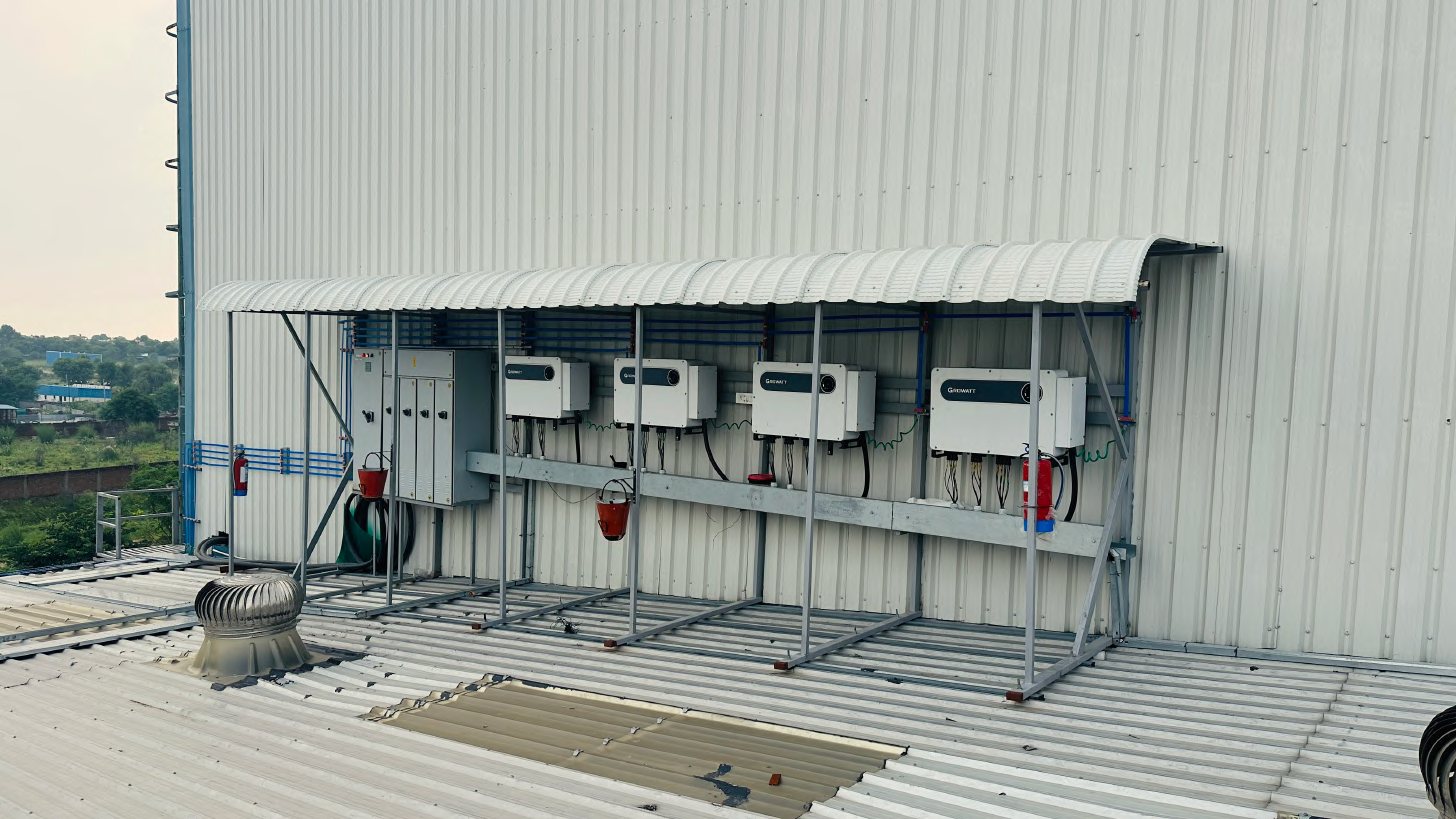
For rooftops up to a few MW, string inverters (typically 50–350 kW each) are the standard. They offer many MPPTs to handle multiple roof faces, they localise faults (one failed inverter takes out a fraction of the plant), and they can be replaced quickly. Central inverters still make sense for large, uniform ground-mount plants.
What to ask your EPC: the DC/AC ratio and why; the PVsyst report with clipping losses; the string sizing calculation showing Voc,max at the site's minimum temperature and Vmp at maximum cell temperature; and the MPPT allocation drawing.
Our Specta Quartz case study shows a 500 kW metal-shed plant built around four 125 kW string inverters. If you would like a second opinion on a design or a quote, send it to us.
Sources and further reading
- Bridge to India: DC overloading in Indian solar projects
- SurgePV: solar inverter sizing guide
- Portlandia Electric: DC/AC ratio and string voltage reference
Standards and regulations change. Check the current edition and your state regulator before relying on any figure for a specific project.