Modules
Reading the Kiwa PVEL Scorecard before you buy solar modules
A certificate says a module passed once. Independent reliability testing tells you how much margin it has left for 25 Indian summers.
Every module datasheet says the same things: IEC 61215 and IEC 61730 certified, ALMM listed, 25 or 30-year warranty. None of that tells you how a specific bill of materials (BOM) behaves after the equivalent of 25 Indian summers. The most widely used answer to that question in project finance is the Kiwa PVEL PV Module Reliability Scorecard, and it is worth understanding properly before you sign a module purchase order.
What Kiwa PVEL actually tests
Kiwa PVEL (originally PV Evolution Labs, now part of the Kiwa group) runs its Product Qualification Program (PQP). Manufacturers voluntarily submit modules, PVEL witnesses or samples them from the factory, and then pushes them well beyond IEC certification limits. Certification tells you a module passed a minimum bar once; the PQP tells you how much margin it has.
| Sequence | What it does | What it predicts in the field |
|---|---|---|
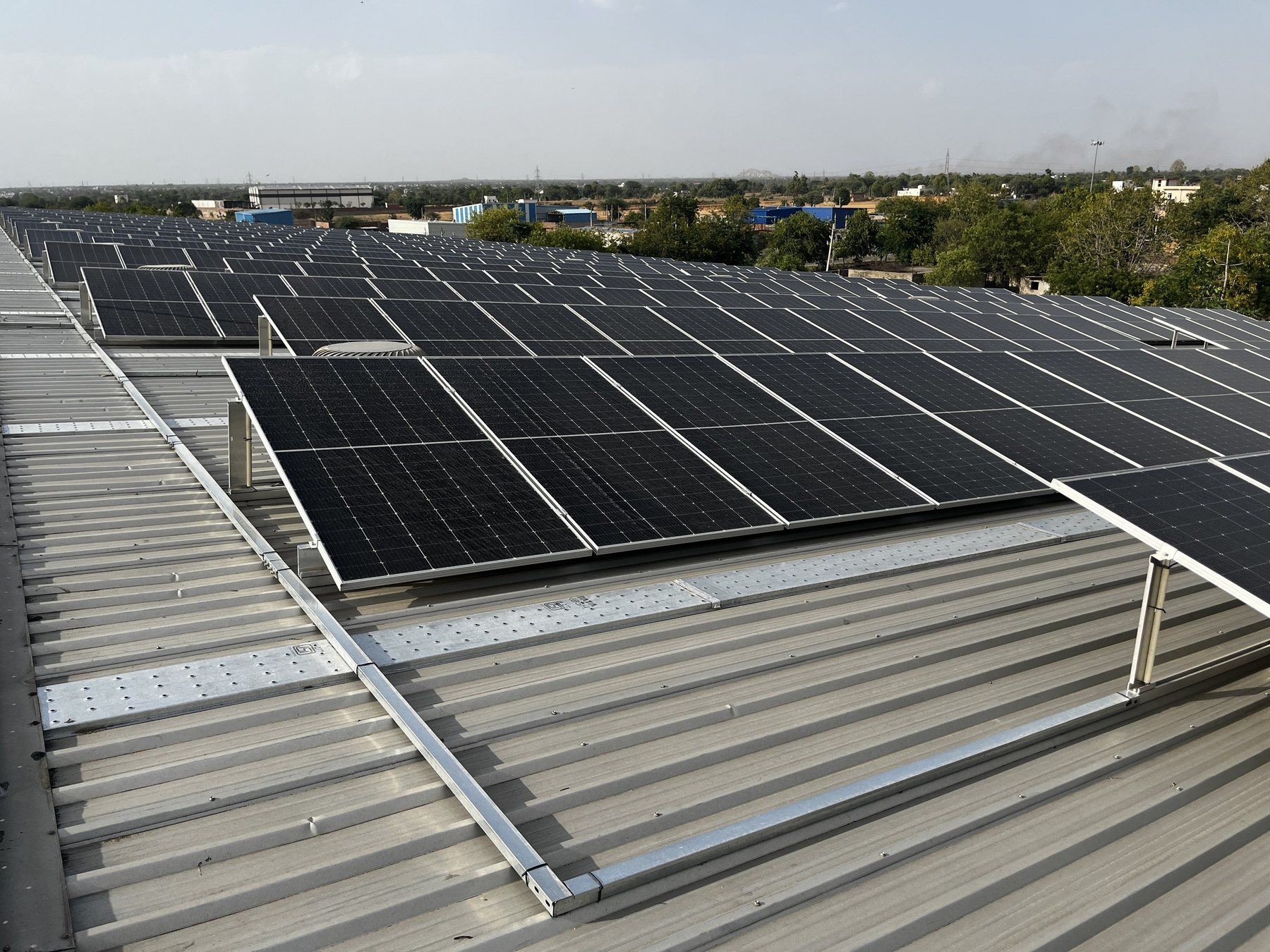
| Thermal cycling (TC600) | 600 cycles between −40 °C and +85 °C, three times the IEC 61215 count | Solder bond fatigue, ribbon and busbar cracks. Very relevant to metal roofs in Rajasthan where module backs exceed 70 °C |
| Damp heat (DH2000) | 2,000 hours at 85 °C and 85% humidity, double IEC | Corrosion, encapsulant and backsheet breakdown, delamination. Critical for coastal Maharashtra, Gujarat and Tamil Nadu |
| Mechanical stress (MSS) | Static and dynamic loading, then thermal and humidity-freeze cycles | Microcracks from wind, handling and walking, and whether those cracks grow into power loss |
| Hail stress (HSS) | Ice balls fired at increasing size and speed, then stress cycling | Glass breakage and cell damage. Thin 2 mm glass-glass modules are the ones to watch |
| PID | High system voltage with heat and humidity for 192+ hours | Potential-induced degradation at the negative end of long 1,000–1,500 V strings |
| LID + LETID | Light and elevated-temperature exposure | Early power loss in the first months and years |
| UVID | Accelerated UV dose on the front surface | UV-induced degradation, a known weakness of some TOPCon cell designs |
| PAN performance | Characterises the module for energy modelling (PVsyst .PAN file) | How accurate your generation estimate is likely to be |
To be named a Top Performer in a test, a BOM must lose less than 2% power after TC, DH, MSS, PID or UVID, and less than 1% combined after LID and LETID.
What the 2026 Scorecard says
The 12th edition was published in May 2026 and, for the first time, updated again in November 2026. The headline is uncomfortable: 87% of manufacturers and 61% of BOMs had at least one test failure, a record for the fourth year running, even though average power loss in UVID, PID, TC and DH improved. Some numbers worth noting:
- Thermal cycling: 83% of BOMs lost less than 2% after TC600.
- Damp heat: 69% of BOMs lost less than 2% after DH2000. Kiwa PVEL linked narrower encapsulant sheets with more delamination failures.
- Breakage: 26% of BOMs broke during mechanical load testing, and 45% of manufacturers had at least one major delamination failure.
- UVID became a Top Performer category for the first time.
- No single module model was a Top Performer in every test.
The trend behind this is cost pressure: thinner glass (2.0 mm glass-glass instead of 3.2 mm glass-backsheet), thinner frames, narrower encapsulant and new cell technologies being scaled faster than field experience can accumulate.
How to use the Scorecard when you buy modules
The mistake most buyers make is reading the Scorecard at the brand level. A manufacturer is listed as a Top Performer for a specific BOM (cell, glass, encapsulant, backsheet, junction box and frame combination) from a specific factory. The modules arriving on your site may be a different BOM from the same brand.
- Ask for the PQP report, not the logo. Request the Kiwa PVEL report for the exact model and wattage you are buying, and check the factory location and BOM listed.
- Lock the BOM in the purchase order. Name the cell supplier, glass thickness, encapsulant type (EPE, POE, EVA) and backsheet in the PO, with a clause that BOM changes need written approval.
- Weight the tests that match your site. For hot inland metal roofs, TC and LETID matter most. For coastal or humid sites, DH and PID. For TOPCon, look closely at UVID and DH.
- Check India-specific compliance separately. The Scorecard is global. In India the module must still be on ALMM List-I, and from 1 June 2026 List-I modules must use ALMM List-II cells. Net-metering and open access projects have an exemption for the cell requirement until 31 December 2026, so check the commissioning date before you buy.
- Inspect what arrives. Pre-shipment EL (electroluminescence) imaging of a sample from the batch catches cracked cells before they are on your roof.
A practical rule we use: treat the Scorecard as a filter, not a ranking. A BOM with a documented Top Performer result in the tests that matter for your climate, plus a clean pre-dispatch EL sample, is a lower-risk purchase than a cheaper module with no independent test history.
What the Scorecard does not tell you
- Factory consistency. PQP samples are witnessed, but your container is a different production run. Batch inspection still matters.
- Installation damage. Microcracks from walking on modules, poor handling or over-tightened clamps are not covered. On metal sheds this is often the bigger risk.
- The manufacturer's ability to honour a warranty in year 12. Look at bankability and Indian service presence separately.
We help clients choose modules against their site's climate and roof type, using independent test evidence like this. If you are comparing quotes with different module brands, send them to us and we will tell you what the paperwork does and does not prove.
Sources and further reading
- Kiwa PVEL: 2026 PV Module Reliability Scorecard, executive summary
- PV Tech: Module test failures continue to increase in the 2026 Scorecard
- Kiwa: Inside Kiwa PVEL's 2025 PV Module Reliability Scorecard
- PV Tech: MNRE extends ALMM List-II exemption for net-metering and open access projects
Standards and regulations change. Check the current edition and your state regulator before relying on any figure for a specific project.