Safety
Working at height on solar roofs: skylights, walkways and lifelines
The most dangerous thing about a rooftop solar plant is not electricity. It is the roof.
The most dangerous thing about a rooftop solar plant is not electricity. It is the roof. Around the world, the incident reports from solar construction keep describing the same accident: a worker steps backwards onto a skylight or a corroded sheet and falls through to the floor below. These falls are almost entirely preventable, and a plant designed for safe access is also cheaper to maintain for 25 years.
Where the risk is
- Fragile skylights and translucent sheets. Polycarbonate and fibreglass sheets look solid and are often covered in dust. They will not carry a person's weight, especially after years of UV exposure.
- Old or corroded metal sheets. Thin sheets between purlins can buckle or tear under a point load.
- Unprotected roof edges and openings. Ventilator openings, cut-outs and parapet-less edges.
- Access routes. Ladders that are not tied off, or lifting modules up by hand.
- Heat. Metal roofs in summer reach 60–70 °C; heat stress causes the lapses in attention that precede falls.
US investigations into fatal skylight falls during solar installations have repeatedly found the same root causes: unguarded skylights and no personal fall arrest system. A review of US labour data found most skylight falls happen during roof maintenance and repair, which is exactly what O&M teams do for decades after commissioning.
Controls during construction
The hierarchy is the same as for any work at height: eliminate, then prevent falls collectively, then arrest falls individually.
- Plan the work from the ground. Material lifting, layout marking and module distribution should be planned to minimise time on the roof.
- Cover or guard every skylight before work starts, with mesh, covers rated for a person's weight, or guardrails. Warning tape and cones are not protection.
- Edge protection on exposed edges where people work within reach.
- Temporary lifelines with full-body harnesses and double lanyards, anchored to structural members, for anyone outside protected zones.
- Crawl boards or temporary walkways to spread loads on fragile or older sheets.
- Mechanical lifting for module pallets and structure bundles, never people carrying modules up ladders.
- Permit to work and daily toolbox talks, covering the day's hazards, weather and heat.
Designing the plant for safe maintenance
The construction phase lasts weeks. Cleaning, inspections and repairs go on for 25 years, often done by people who were not there when the plant was built. Permanent safety infrastructure is therefore part of the design, not an extra:
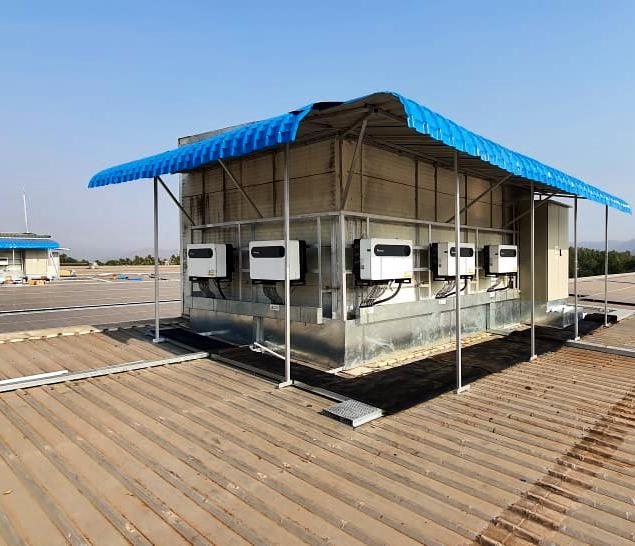
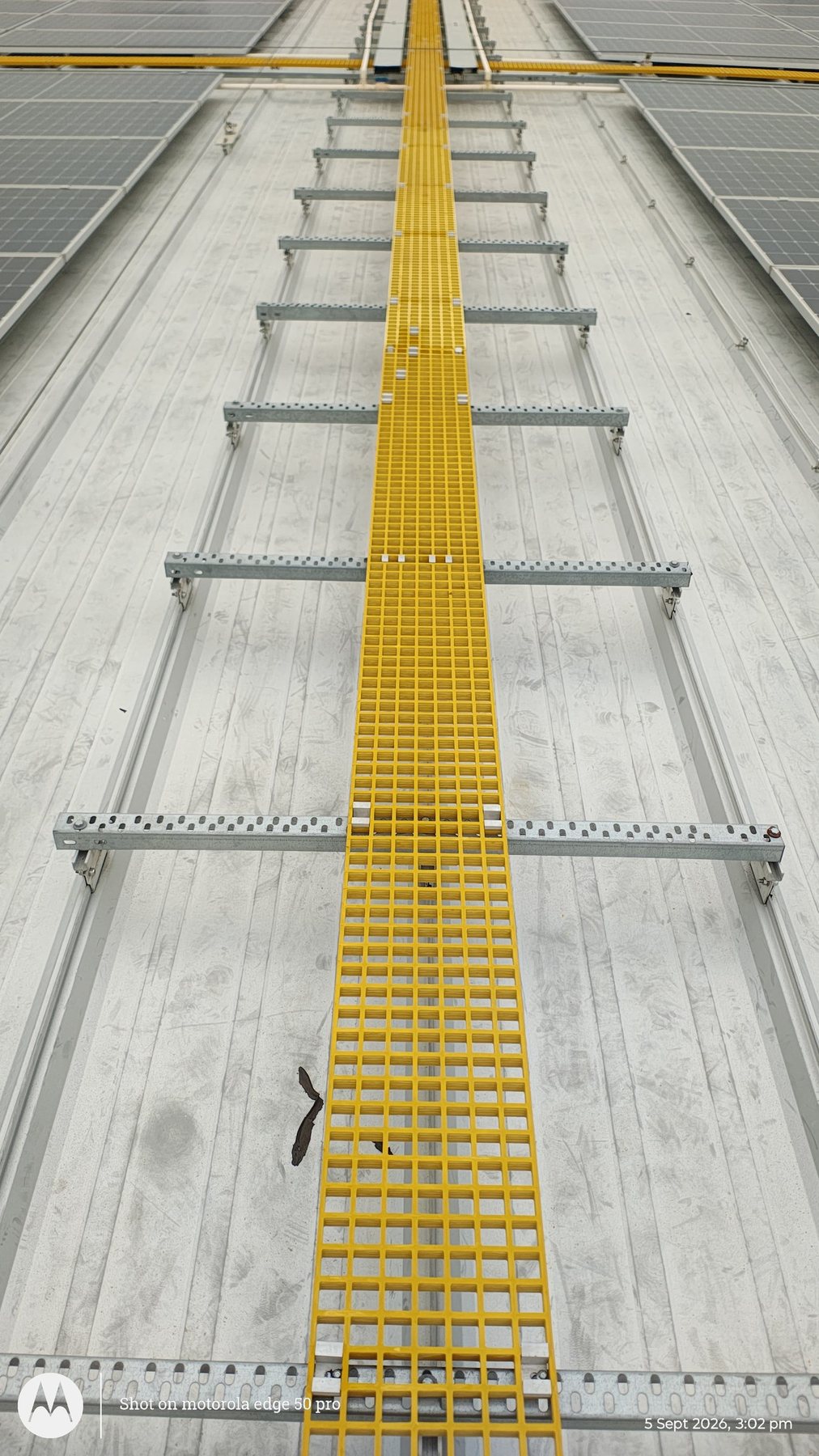
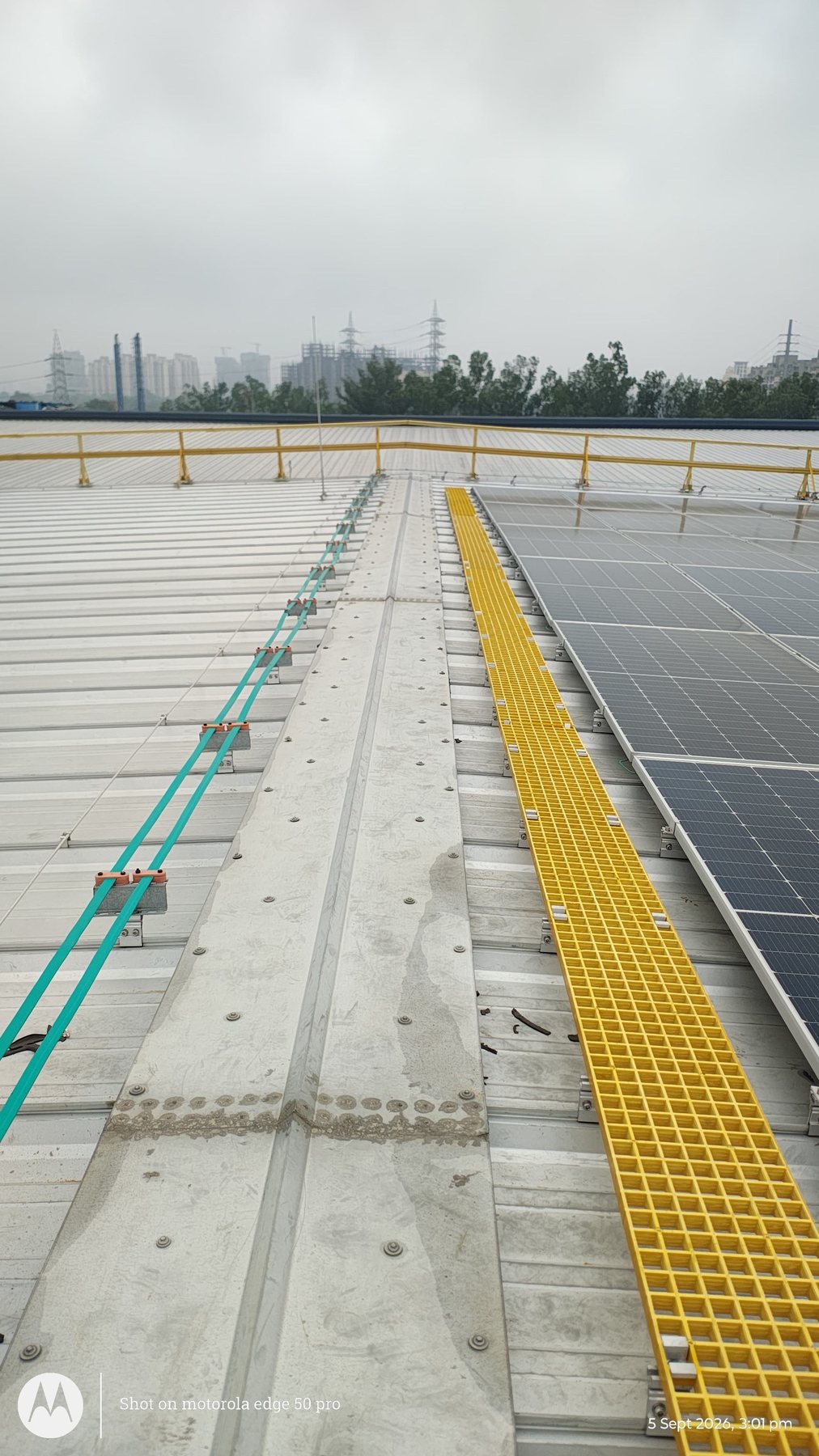
- Permanent walkways. FRP grating walkways along the module rows give technicians a defined route that spreads their weight and keeps them off modules and sheet valleys. They also prevent the microcracks caused by people walking on modules.
- Horizontal lifelines. A permanent stainless-steel lifeline along each walkway lets a harnessed technician clip on once and move freely.
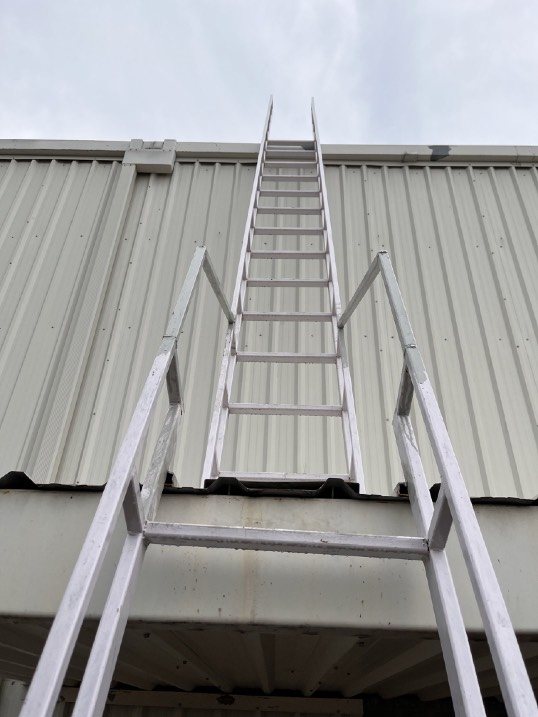
- Fixed access ladders with cages or fall-arrest rails. A safe way onto the roof, not a borrowed bamboo ladder.
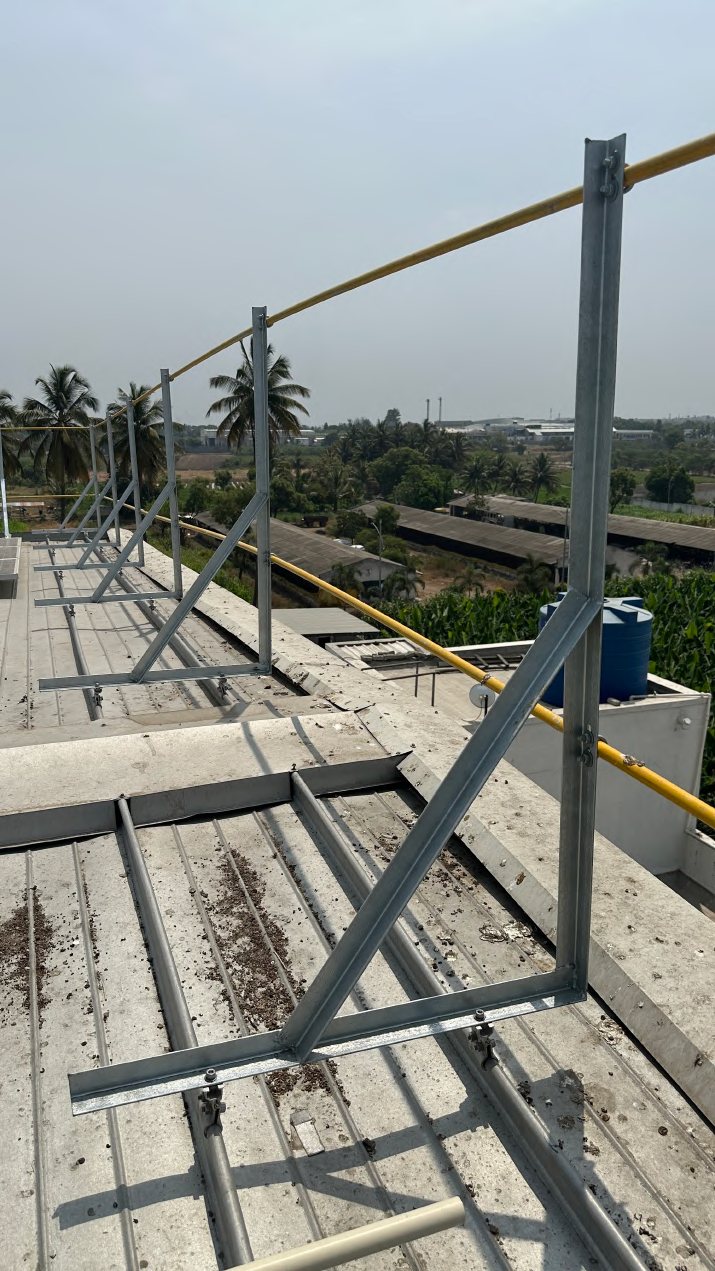
- Guardrails at edges near inverters, combiner boxes and cleaning water points.
- Skylight protection left in place permanently where walkways pass close to skylights.
Electrical safety on the roof
Strings of modules produce DC voltages of up to 1,000–1,500 V whenever there is daylight, and they cannot be switched off at the module. Technicians must treat every DC cable and connector as live, use insulated tools and Class 0 or Class 00 gloves where appropriate, and follow a lock-out, tag-out procedure at the inverter and DC isolators. Our guide to DC fire safety covers the electrical side in detail.
Questions to ask any EPC: Who is the site safety officer? How will skylights be protected? Are harnesses and lifelines provided for every worker on the roof? Will permanent walkways and lifelines be handed over with the plant? A contractor who prices these out to win the order is pricing out someone's safety.
On our metal-shed projects, walkways, fixed access ladders and edge protection are part of the base design, not optional extras. You can see them in our Venus Interlinings and Specta Quartz case studies.
Sources and further reading
- OSHA: Green job hazards, solar energy, falls
- NIOSH / CDPH FACE report: electrical worker falls through skylight while installing solar panels
- WorkSafe Victoria: falls through skylights, fragile roofs, voids and penetrations
- Re-evaluating falls through skylights in the USA (2023)
Standards and regulations change. Check the current edition and your state regulator before relying on any figure for a specific project.