Grid & Metering
Net metering, net billing or zero export? Metering and DG sync for C&I solar
The panels decide how much energy you make. The metering arrangement decides how much of it you are paid for.
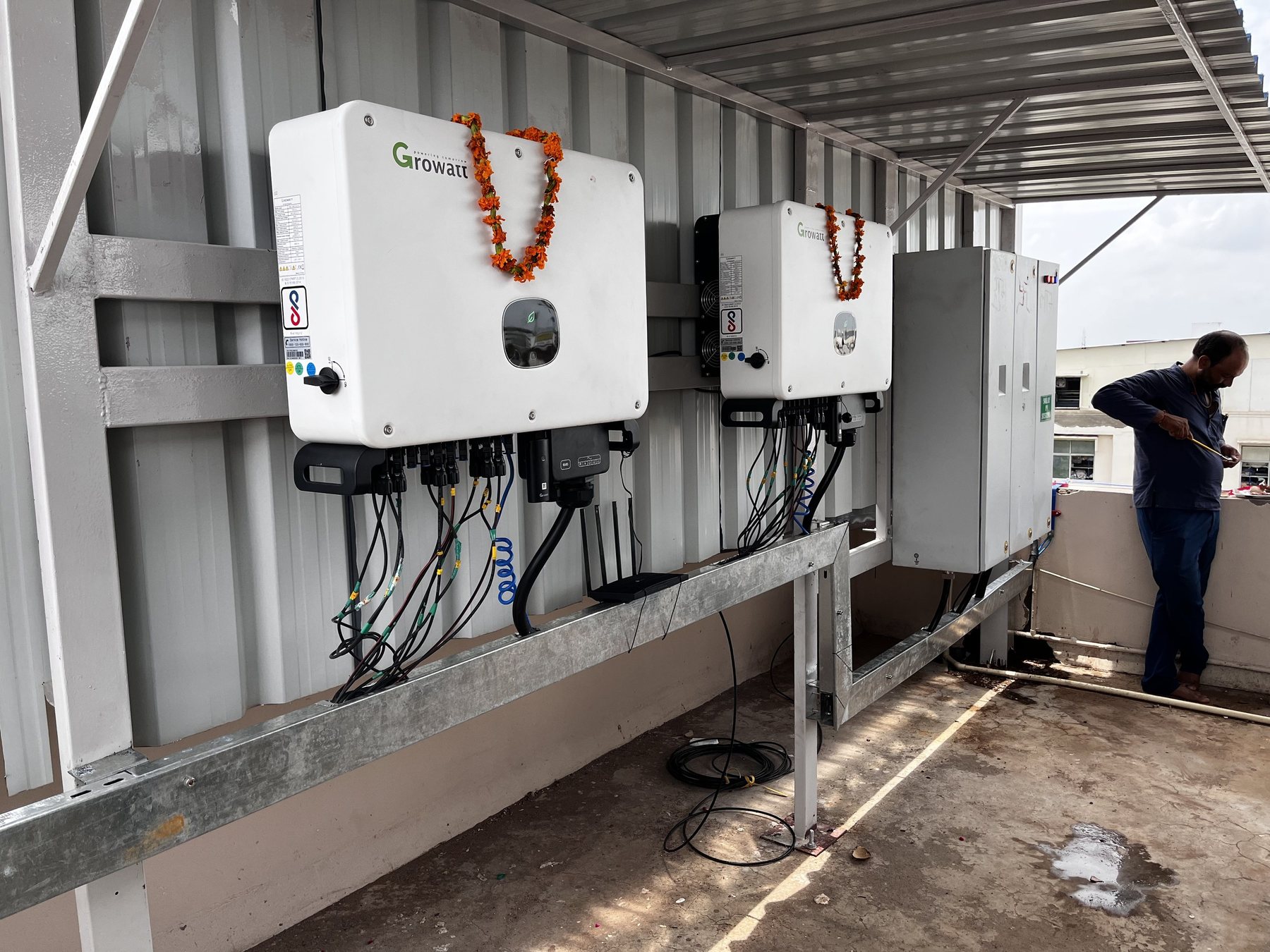
The panels decide how much energy your plant produces. The metering arrangement decides how much of it you get paid for. For commercial and industrial consumers in India, the choice between net metering, net billing, gross metering and a zero-export captive plant can change the project's payback by years, and it interacts with something many factories also have: diesel generators.
The metering options
| Arrangement | How exported energy is treated | Typical use |
|---|---|---|
| Net metering | Exported units are offset against imported units, usually within a billing period or settlement year, at your retail tariff | Allowed nationally up to 500 kW (or the sanctioned load, whichever is lower), subject to state regulations |
| Net billing / net feed-in | Imports are billed at your tariff; exports are credited at a lower feed-in rate set by the state commission | Larger plants above the net-metering limit, and some states' preferred model |
| Gross metering | All solar generation is sold to the distribution company at a feed-in tariff; all consumption is billed normally | Rare for C&I; sometimes used for RESCO projects on rented roofs |
| Behind-the-meter, zero export | No export at all; the plant only supplies on-site load | Consumers above the net-metering limit, or where the discom connection process is slow |
The national framework comes from the Electricity (Rights of Consumers) Rules, 2020 and their amendments, which raised the net-metering limit to 500 kW in 2021 and left detailed arrangements to state electricity regulatory commissions. Each state's rooftop regulations (for example MERC in Maharashtra, RERC in Rajasthan) set the actual banking, settlement, charges and time-of-day rules, and they change frequently. Always check the current state regulation for your connection category.
Time-of-day tariffs change the maths
Many states now apply time-of-day (ToD) tariffs to commercial and industrial consumers, with cheaper "solar hours" during the day and higher evening peak rates. Under net metering with ToD, energy exported at noon may be credited only against the noon slot, not against expensive evening imports. This reduces the value of export and increases the value of self-consumption: matching the plant size to your daytime load, and shifting flexible loads (pumping, chilling, compressors) into solar hours.
Meters you will see
- Bidirectional net meter at the point of supply, installed or approved by the discom, recording import and export (and ToD slots where applicable).
- Solar generation meter at the inverter output, used for subsidy, REC or performance records, and by the discom in some states.
- CT/PT-operated meters on HT (11 kV and above) connections, with a metering cubicle that must meet the discom's specifications.
- Check meters for verifying PPA billing on RESCO projects.
Zero export: how it actually works
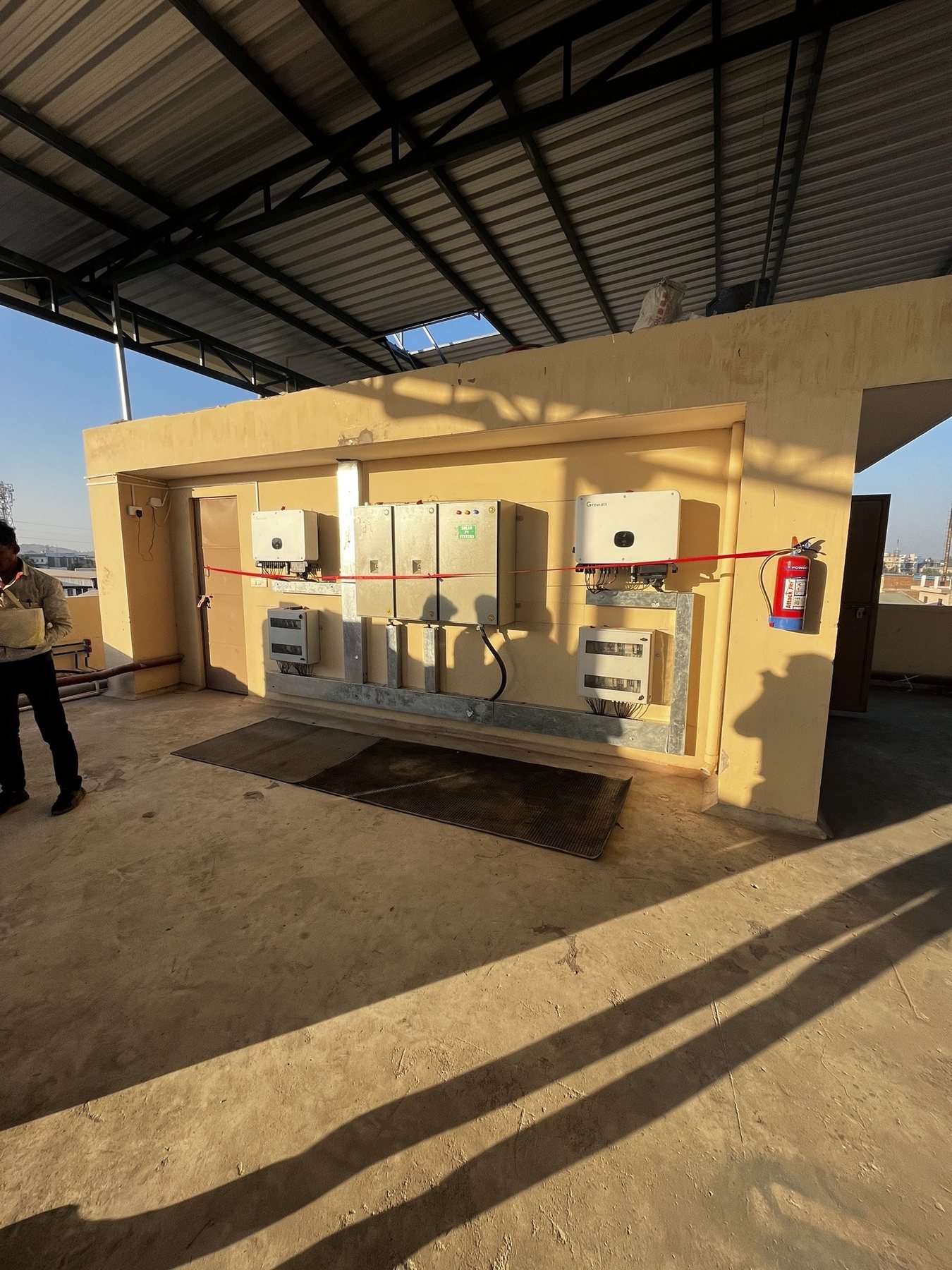
A zero-export (or "export limitation") system measures power at the grid incomer and continuously throttles the inverters so that net flow toward the grid stays at or slightly above zero. It consists of:
- A power meter or CT set at the main incomer, measuring direction and magnitude of power flow.
- A controller (a dedicated zero-export device, or the inverter manufacturer's smart logger) that sends active-power setpoints to every inverter several times a second.
- A reverse power relay as a backup protection, which trips the solar breaker if export persists despite control.
The trade-off is curtailment: on holidays, Sundays or during shutdowns, the plant is held back to match the small remaining load. This lost energy must be included in the financial model, which is why plants under zero export are usually sized to the minimum daytime load rather than the roof area.
Solar with diesel generators
Many factories run DG sets during grid outages. Connecting solar to a DG-backed bus without control is dangerous: if solar output exceeds the plant load, power flows back into the generator, which then "motors". This can damage the engine and alternator, and the DG's own reverse-power protection will trip it, causing a blackout.
The solution is a PV-DG synchronisation controller:
- It detects when the DG is running (via a breaker status signal or by measuring DG output).
- It limits solar output so the DG always carries a minimum load, commonly 30–40% of its rating, which the DG manufacturer will specify. Running diesel engines at very low load causes wet stacking and carbon build-up.
- It ramps solar back up smoothly when the grid returns.
- With multiple DGs, it reads the total running capacity and adjusts the limit accordingly.
The fuel saving is real. A factory running DGs for several hours a day can save significant diesel by letting solar carry 60–70% of the load during outages. But the controller, wiring and settings must be designed with the DG OEM's minimum-load and reverse-power settings, not just plugged in.
A quick decision guide
- Sanctioned load under 500 kW, export likely on holidays: net metering, if your state's regulation and ToD rules make export valuable.
- Large consumer with high daytime base load: behind-the-meter with zero export, sized to minimum daytime load.
- Frequent outages with DG backup: add a PV-DG controller regardless of the grid metering arrangement.
- Load bigger than your roof can serve: look at open access and PPA options alongside rooftop.
We prepare the metering and protection scheme, discom application and load analysis as part of every project. Send us 12 months of bills and your DG details and we will tell you which arrangement fits.
Sources and further reading
- Electricity (Rights of Consumers) Amendment Rules, 2021
- Down To Earth: how India's net metering norms play out
- MERC: 2nd amendment to rooftop regulations (2024)
- Ornate Solar: what is a DG-PV synchronisation device
Standards and regulations change. Check the current edition and your state regulator before relying on any figure for a specific project.